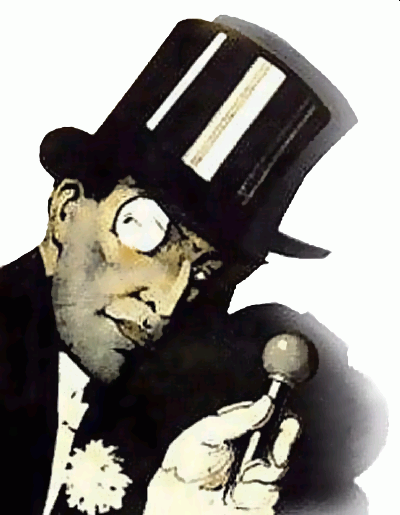
Arsène Lupin: Unmasking the Original Gentleman Thief
In the annals of literature, few characters have captured the human imagination quite like the morally ambiguous, yet undeniably charming, master thief. This archetype, known as the "gentleman thief," has graced countless pages and screens, from the sophisticated stratagems of Danny Ocean to the enigmatic allure of Thomas Crown. Yet, before these modern icons, there was one who set the standard, the true pioneer of the elegant heist and the cunning escape: Arsène Lupin, the original Lupin Gentleman Thief.
Maurice Leblanc's creation burst onto the scene in the early 20th century, offering readers a dazzling counterpoint to the era's ubiquitous detectives. Lupin was not merely a criminal; he was a phenomenon – a debonair aristocrat, a master of disguise, and a man whose strict code of honor often blurred the lines between villainy and heroism. He didn't just steal; he orchestrated grand performances, outwitting the law with audacious flair and a wink to the audience. To truly understand the enduring appeal of the gentleman thief trope, one must journey back to its very genesis, to unmask the genius and charm of Arsène Lupin.
The Genesis of a Gentleman Criminal: Maurice Leblanc's Masterpiece
The dawn of the 20th century saw Europe gripped by a literary sensation: the exploits of Sir Arthur Conan Doyle's Sherlock Holmes. French publishers, eager to replicate this success, sought their own iconic character. It was against this backdrop that the magazine Je sais tout commissioned Maurice Leblanc to craft a detective-style tale. What Leblanc delivered, however, was something far more subversive and captivating. Instead of a moralistic solver of crimes, he gave the world Arsène Lupin – a brilliant anti-hero whose criminal genius and undeniable panache would forever alter the landscape of popular fiction.
Lupin made his grand debut in the July 15, 1905 issue of Je sais tout with the short story "L'Arrestation d'Arsène Lupin" ("The Arrest of Arsène Lupin"). The character's immediate success was overwhelming, prompting Leblanc to quickly compile the initial novellas into the first collection, Arsène Lupin, gentleman-cambrioleur, published in 1907 by Pierre Lafitte & Cie. This volume, known in English as Arsène Lupin, Gentleman-Thief, gathered nine captivating stories that had previously captivated readers in serial form. It chronicled the early exploits of a character who was at once a master criminal, a charming socialite, and a figure of profound moral complexity. Leblanc had not merely created a character; he had established a literary dynasty, with Lupin's adventures spanning three decades, resulting in 17 novels and 39 novellas that solidified his status as an enduring figure in literature.
Unpacking the Persona: What Makes a True Lupin Gentleman Thief?
What elevates Arsène Lupin beyond a mere burglar and cements his status as the quintessential Lupin Gentleman Thief? It's a complex tapestry woven from specific traits and a distinctive operational philosophy:
- Unmatched Intellect and Wit: Lupin's greatest weapon is his mind. He plans his elaborate heists with meticulous precision, always several steps ahead of his pursuers. His quick thinking, sharp repartee, and ability to improvise on the fly are legendary.
- Master of Disguise and Identity: Lupin is a true chameleon, able to adopt any persona with convincing ease. From a destitute wanderer to a distinguished duke, his transformations are so complete that even those closest to him struggle to recognize him. This skill is not merely for evasion, but often integral to his audacious plans.
- A Strict Code of Honor: This is perhaps the most defining characteristic of the Lupin Gentleman Thief. Unlike common criminals, Lupin rarely harms the innocent and often targets individuals he deems deserving of his attention – typically the genuinely villainous, the pompous rich who undervalue their possessions, or those who have acquired their wealth dishonestly. He sometimes even acts as an anonymous benefactor, righting wrongs and aiding the helpless, embodying a unique form of vigilante justice.
- Debonair Charm and Aristocratic Bearing: Lupin moves through high society with an effortless grace. He is educated, cultured, and possesses an irresistible charm that disarms his victims and captivates readers. He's not just robbing; he's performing, and his elegance is part of the show.
- Audacity and Panache: Lupin revels in the theatricality of his crimes. He often leaves calling cards, sends warnings, or even challenges his pursuers directly, adding an element of sport to his illicit activities. His heists are less about crude acquisition and more about demonstrating his intellectual superiority.
This unique blend of cunning, charm, and a peculiar moral compass is why characters like Danny Ocean and Thomas Crown resonate so deeply today. They inherit the archetype that Lupin so brilliantly forged: the idea that crime, when executed with elegance and a dash of altruism (or at least, a distinct lack of malice towards the truly deserving), can be incredibly entertaining. When you delve into Lupin's stories, you don't just follow a thief; you witness a mastermind at play, a man who, despite his criminal nature, often earns our respect, if not our admiration.
The Grand Rivalry: Lupin Versus the World's Greatest Detective
The very concept of Arsène Lupin was born in the shadow of Sherlock Holmes, and it was inevitable that these two titans of intellect would eventually clash. Indeed, Holmes is more than just a predecessor; he is a foil against whom Lupin's genius truly shines. Maurice Leblanc, keenly aware of the public's fascination with the British detective, couldn't resist pitting his creation against him.
This thrilling rivalry began subtly, with stories like “Sherlock Holmes Arrives Too Late,” where Lupin deftly outmaneuvers the famed detective. The tension escalated into an entire collection titled Arsène Lupin versus Herlock Sholmes. You might notice the slightly altered name for Holmes. This change was a result of Sir Arthur Conan Doyle's objections to the unauthorized use of his copyrighted character, leading Leblanc to cleverly reconfigure the detective's name. This legal skirmish only added to the legend, highlighting the immense popularity and perceived threat of Lupin to Holmes's literary dominance.
Both Lupin and Sholmes (or Holmes) are characterized by their debonair style, cultured tastes, and superhuman intellects, making them ideal adversaries. Yet, in these encounters, it's often Lupin who holds the upper hand, frequently outsmarting the otherwise unbeatable detective. This dynamic served to elevate Lupin further, demonstrating that he was not merely a response to Holmes, but a formidable character capable of surpassing even the most renowned mind in fiction. The battles between these two masterminds are not just about who wins, but about the clash of different philosophies and the sheer joy of watching two extraordinary intellects at work. For a deeper dive into their thrilling confrontations, read more in our companion article: Lupin vs. Holmes: The Gentleman Thief Who Outsmarted the Detective.
Beyond the Page: The Enduring Legacy of Arsène Lupin
Maurice Leblanc continued to write Lupin's adventures for over three decades, a testament to the character's profound and lasting appeal. What began as a series of novellas in a magazine quickly evolved into a literary phenomenon, with Lupin's exploits captivating readers across generations. His influence, however, extends far beyond the printed page.
Lupin's magnetic persona and clever escapades have inspired a multitude of adaptations across nearly every form of media. He has been brought to life in classic films, enduring television series, vibrant comic books, and imaginative animated features. Each new adaptation finds fresh ways to interpret his charm, wit, and moral complexity, introducing the Lupin Gentleman Thief to new audiences around the globe.
The character's appeal lies in his ability to embody both our fascination with forbidden thrills and our desire for a hero who challenges conventional morality without succumbing to true villainy. He is the ultimate anti-hero, stealing not just jewels but also hearts, and leaving behind a trail of bewildered authorities and captivated admirers. Even today, over a century after his debut, Arsène Lupin continues to inspire, proving that the allure of a debonair criminal with a conscience is truly timeless. To explore the diverse ways Lupin has transitioned from paper to screen, delve into our related feature: From Page to Screen: The Enduring Legacy of Arsène Lupin.
Tips for Appreciating the Original Gentleman Thief:
- Start at the Beginning: The best entry point is Arsène Lupin, Gentleman-Thief, the first collection of short stories. It perfectly encapsulates his early character and sets the stage for his many adventures.
- Focus on the Wit, Not Just the Theft: Lupin's stories are less about the monetary value of what he steals and more about the intellectual chess game he plays with the police and his victims. Appreciate his cleverness and the elaborate nature of his plans.
- Embrace the Moral Ambiguity: Lupin isn't a straightforward hero or villain. His actions often have complex motivations. Understanding this nuanced morality is key to appreciating his character.
- Observe the "Code": Pay attention to his ethical boundaries. He rarely causes physical harm, and often, his targets are those who can afford the loss or are themselves corrupt. This "gentlemanly" conduct is central to his identity.
Arsène Lupin remains an iconic figure because he embodies a fantasy of sophisticated rebellion. He is the ultimate escapist fantasy, a character who lives by his own rules, outwits authority with a smile, and proves that even on the wrong side of the law, one can possess integrity and undeniable charm.
In conclusion, Arsène Lupin is far more than just a character; he is a foundational archetype, the original Lupin Gentleman Thief who inspired a genre and continues to captivate audiences worldwide. Maurice Leblanc's brilliant creation, born from a desire to rival Sherlock Holmes, instead forged a unique path, demonstrating that a criminal could be as admirable as a detective. His enduring legacy in literature and across various media platforms is a testament to the timeless appeal of wit, charm, and a sophisticated touch of roguery. Lupin's adventures remind us that true genius can be found in the most unexpected places, often wearing a perfect disguise and executing a flawless heist, all with an unforgettable flourish.